
The best-selling snack in Korea in 2025 offers insight into everyday Korean culture, consumer trends, and how travelers experience local life beyond tourist attractions.
South Korea’s best-selling snack in 2025 is not a novelty item or a premium export designed for overseas markets. It is Saeukkang, Nongshim’s shrimp-flavored cracker first launched in the 1970s — and its continued dominance provides a useful window into domestic consumer behavior, cultural production, and how travelers increasingly encounter everyday Korean culture.
According to retail sales data cited by Korean media and industry trackers, Saeukkang generated 57.8 billion won in sales in the first half of 2025, ranking first among all snack categories for the second consecutive year. It outperformed fast-growing potato chip brands as well as long-established confectionery staples such as Choco Pie and Pepero.
Rather than signaling a short-term trend, the figures point to something more structural: the enduring strength of legacy consumer goods in a fragmented, inflation-sensitive market — and their relevance to Korea’s evolving tourism narrative.
A Legacy Snack in a Highly Competitive Market
South Korea’s snack industry remains one of the most competitive segments of its consumer economy. Major players including Orion, Nongshim, Lotte Wellfood and Crown Confectionery operate within narrow margins, where incremental shifts in consumer preference can quickly alter market rankings.
Orion currently holds the largest overall market share, with Nongshim close behind. In such an environment, Saeukkang’sability to retain the top sales position is notable. Analysts attribute this to price stability, familiarity and high purchase frequency, factors that continue to anchor everyday consumption even as novelty products rotate rapidly through store shelves.
Legacy snacks like Saeukkang often function as leading indicators of domestic consumer sentiment. Their performance reflects what Koreans consistently choose to buy, rather than what is temporarily popular or optimized for export appeal.
Industry reports show a tightly contested Korean snack market:
| Korean Snack | Market |
|---|---|
| Saeukkang | 57.8 billion won |
| Poka Chips | 54.4 billion won (fastest growth among top sellers) |
| Choco Pie | 47.8 billion won |
| Pepero | 42.6 billion won |
| Nongshim Pringles | 41.8 billion won |
| Kkokkalcorn | 41.2 billion won |
Pop Culture as Brand Reinforcement, Not Reinvention
In 2025, Saeukkang’s visibility was reinforced through a limited-edition collaboration tied to K-Pop Demon Hunters, one of the year’s most widely streamed Korean animated titles. The collaboration appeared primarily through themed packaging distributed across major retail channels, especially convenience stores.
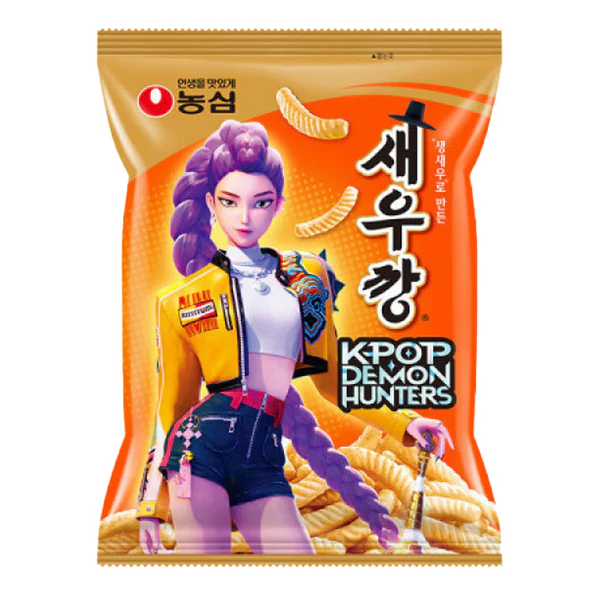
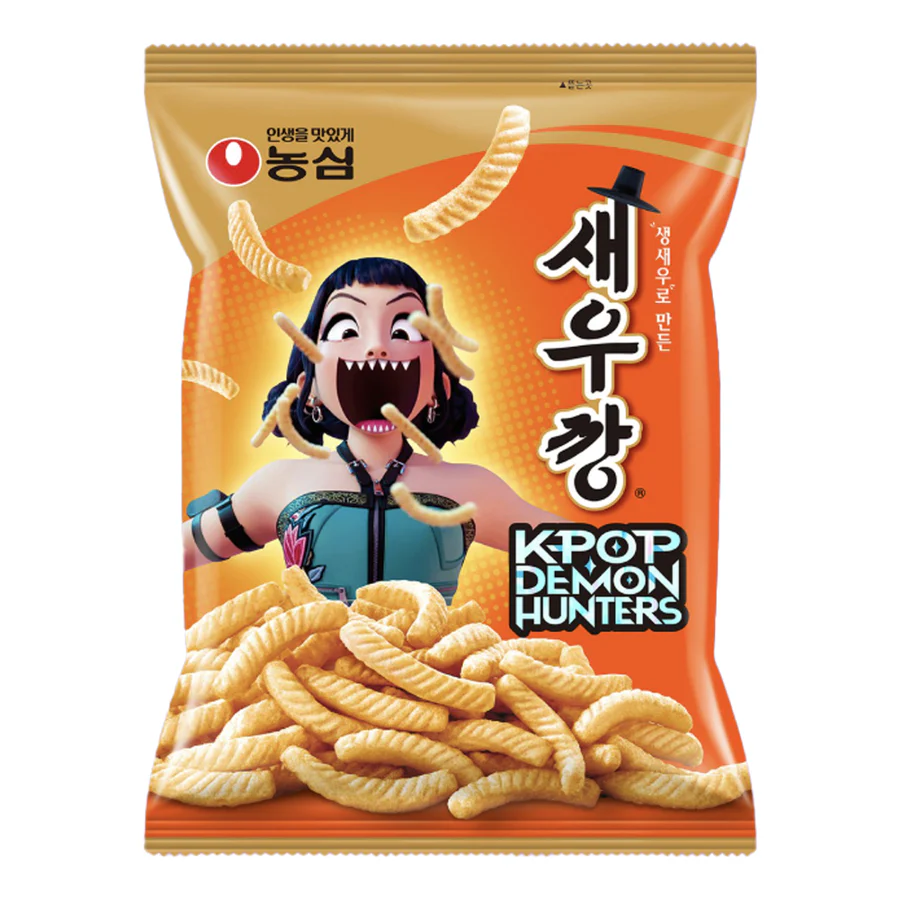
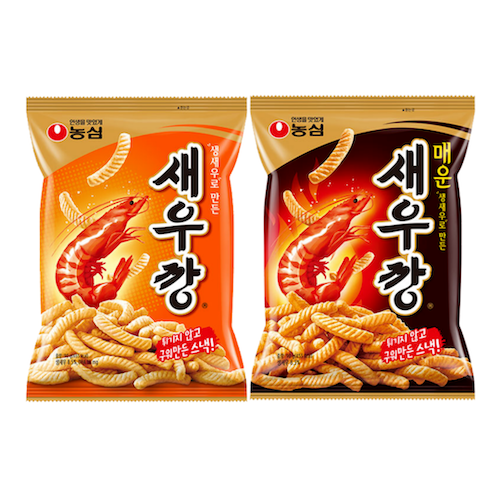
Crucially, the product itself remained unchanged. From a business perspective, this reflects a low-risk reinforcement strategy rather than a reinvention. By leveraging established entertainment IP, brands can refresh cultural relevance and shelf presence without altering pricing structures, supply chains or production processes.
This model allows companies to extend brand lifespan while minimizing capital expenditure and operational risk — an increasingly common approach in Korea’s fast-moving consumer goods sector.
Convenience Stores as Everyday Cultural Infrastructure
For many foreign visitors, Saeukkang is not encountered through curated food experiences or specialty shops, but through convenience stores. Chains such as CU, GS25 and 7-Eleven serve as primary points of contact between travelers and everyday Korean life, particularly in transport hubs, residential neighborhoods and tourist-dense districts.
These retail spaces operate as informal cultural gateways. Visitors often enter them multiple times a day — far more frequently than museums or designated attractions — making them one of the most consistent environments through which travelers experience local routines.
From a tourism perspective, convenience stores are increasingly part of Korea’s lived cultural landscape, shaping impressions through repetition rather than spectacle.
Alignment With Korea’s Tourism Direction
Korea’s tourism strategy has been gradually shifting toward everyday experiences — emphasizing how people live, eat and move through ordinary spaces rather than focusing exclusively on large-scale attractions.
Affordable, widely consumed foods like Saeukkang align naturally with this direction. They offer low-barrier cultural entry: they are inexpensive, ubiquitous, require no language proficiency and reflect domestic taste rather than curated narratives.
For first-time visitors, such encounters often feel more immediate and authentic than experiences designed specifically for tourists.
Structural Limits and Policy Considerations
While snack popularity can offer insight into everyday culture, it has clear limitations. Pop-culture-linked consumption is inherently time-bound, and reliance on entertainment IP risks flattening cultural representation if not contextualized.
From a policy standpoint, the challenge lies in recognizing everyday consumption as context, not content. Snacks can introduce visitors to daily life, but they cannot substitute for deeper cultural engagement. Over-emphasizing pop-culture consumption without supporting interpretation may reduce cultural understanding rather than expand it.
What Saeukkang’s Success Ultimately Signals
Saeukkang’s sustained performance highlights several trends relevant to both industry observers and travelers:
- Domestic consumption remains a meaningful cultural signal alongside global Hallyu exports
- Legacy brands can outperform novelty through strategic adaptation rather than constant innovation
- Retail infrastructure plays an outsized role in shaping visitor experience
- Tourism is increasingly encountered through routine interactions, not staged encounters
As Korea continues to promote deeper, everyday forms of travel engagement, the question is not whether a snack can represent Korean culture, but whether ordinary consumption is being adequately recognized as part of the visitor experience economy.
Practical Note for Travelers
Saeukkang is widely available at convenience stores, supermarkets and select duty-free outlets. Limited-edition packaging of the Korea best-selling snack in 2025 typically appears first in convenience stores and major transport hubs. Pricing remains stable and affordable, making it a common choice for casual sampling or practical souvenirs.
Related Posts
1,781 total views, 1 views today