

Last Updated on 6 months by admin
The South Korean border is no longer just a physical line; it has become a digital gateway. As of early 2026, the Ministry of Justice (MOJ) has fundamentally restructured the country’s entry requirements, marking a definitive shift toward a data-driven, “paperless” immigration system. For founders, global mobility managers, and the 22 million tourists South Korea expects this year, these changes are not merely administrative—they are strategic signals of how the nation intends to reach its accelerated goal of 30 million annual visitors by 2028.
According to the latest industry intelligence, the “2026 Pivot” is characterized by two pillars: the extension of K-ETA waivers for key markets and the implementation of a mandatory e-Arrival Card for everyone else.
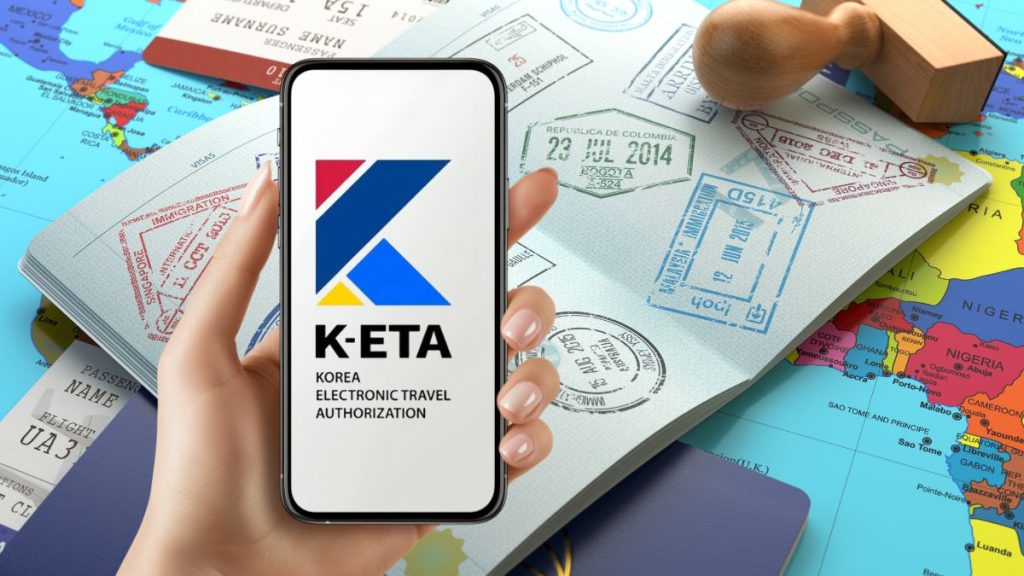
The Macro-Context: Why 2026 is the “Year of Execution”
To understand the “why” behind the policy, one must look at the data. In early February 2026, the Korea Tourism Organization (KTO) CEO, Park Sung-hyeuck, declared 2026 the “Year of Execution.” The goal is to elevate tourism into one of Korea’s top three export industries, alongside semiconductors and automobiles.
To achieve this, the government has moved the “30 million visitor” target up from 2030 to 2028. The 2026 K-ETA and e-Arrival policies are the “friction-reduction” tools designed to make this possible. By removing the 10,000 KRW fee and pre-approval requirement for major markets, Korea is lowering the “psychological barrier” to entry, specifically targeting repeat visitors from high-value regions like North America, Europe, and Japan.
K-ETA Extension: The 2026 Waiver List
As confirmed by the Ministry of Justice, the temporary K-ETA exemption has been extended through December 31, 2026. This applies to 67 countries and regions, including a “core group” of 22 high-priority jurisdictions that have seen consistent exemptions since 2023.
The Geographic Breakdown of Exemptions
- The Power 22 (Core Group): Japan, Taiwan, Hong Kong, Singapore, Macao, United States (including Guam), Canada, United Kingdom, Germany, France, Italy, Netherlands, Spain, Poland, Sweden, Finland, Norway, Belgium, Denmark, Austria, New Zealand, and Australia.
- Other Visa-Exempt Regions: Nationals from these 67 countries do not require a K-ETA to board a flight to Korea. However, the system still allows for voluntary applications—a decision-point that is more important than it appears.
The New Mandatory: The e-Arrival Card
While the K-ETA requirement has been eased for many, the “paperless” push has created a new requirement: the e-Arrival Card. As of January 1, 2026, the traditional yellow paper arrival cards handed out on flights are being phased out in favor of a mandatory digital version.
What the Data Tells Us
- Validity: The e-Arrival Card is valid only for 72 hours (3 days) from the time of submission.
- Cost: $0 (Free of charge).
- Submission Portal: www.e-arrivalcard.go.kr.
- Mandatory For: Any traveler who does not have a valid K-ETA, including short-term visa holders (C-3), business visitors, and those from the 67 K-ETA exempt countries.
Signal vs. Noise: The Strategic “K-ETA Hack”
For the savvy traveler or corporate mobility manager, the most critical “signal” is the synergy between the K-ETA and the e-Arrival Card.
If you have a valid K-ETA, you are exempt from the mandatory e-Arrival Card.
If you are a business traveler from the US or Germany, you now face a choice:
- The “Free” Route: Don’t apply for K-ETA. Instead, fill out a fresh e-Arrival Card online every single time you visit Korea (valid for only 72 hours).
- The “Efficiency” Route: Spend 10,000 KRW (~$7 USD) on a K-ETA once. It remains valid for 3 years and allows you to bypass the e-Arrival Card entirely.
For frequent flyers to Seoul, the K-ETA is no longer a “permit”—it is a pre-clearance pass that buys back time and removes the repetitive task of digital paperwork.
Implementation Hurdles: Technical Signal for Travelers
The transition hasn’t been without its “noise.” Recent reports indicate that the MOJ’s data centers have faced increased loads during the 2026 rollout.
- Metric to Watch: Processing times for voluntary K-ETAs currently average 72 hours, but can spike to 5-7 days during peak K-pop concert seasons or international summits.
- Correction of Misinformation: There is a common misconception that the K-ETA waiver means no digital filing is required. This is false. Unless you are a Korean citizen or a registered resident (ARC holder), you must file either a K-ETA or an e-Arrival Card.
Actionable Summary for Travelers
| If you are… | You need… | Recommendation |
| A Citizen of 67 Exempt Countries | Mandatory e-Arrival Card | Apply for K-ETA anyway. It lasts 3 years and lets you skip the Arrival Card every time. |
| A Visa Holder (D-8, F-series) | Mandatory e-Arrival Card | Check if your residence card allows for “Smart Entry” (SES) to bypass both. |
| From a Non-Exempt Country | Mandatory K-ETA | Apply at least 72 hours before your flight. |
Case Study: The “Workation” Founder in 2026
Consider a founder from San Francisco coming to Seoul for a 2-week “Workation.”
- Pre-Departure: They check the K-ETA site. A pop-up confirms their US passport is exempt from the fee.
- The Trap: They assume they can just show up. Upon arrival at the gate, they are asked for their e-Arrival QR code. They must then scramble to use airport Wi-Fi to fill out the form.
- The Solution: By reading the Digital Nomad 2.0 article, they would have applied for the K-ETA 72 hours prior, securing a 3-year “Fast-Track” status that covers all their future trips to the Pangyo Techno Valley through 2028.
The Road Ahead: “Visit Korea” and AI Integration
Looking beyond 2026, the KTO has outlined 10 flagship projects to revitalize regional tourism. This includes a unified tourism and transportation pass for foreigners and an AI Travel Assistant that integrates with the e-Arrival system to provide personalized itineraries based on your entry data.
This high-resolution data gathering is why the e-Arrival Card is mandatory. The government is moving away from “Data Dumping” and toward “Evidence-Based Thinking.” They want to know exactly where travelers are staying to optimize the 50% “Regional Love” travel refunds being piloted in 20 designated rural areas.
Final Verdict: The KoreaTravelPost Summary
| Metric | Status / Requirement |
| K-ETA Waiver Extension | Confirmed until Dec 31, 2026 |
| Primary Beneficiaries | 67 countries (inc. US, UK, Canada, Japan) |
| Mandatory Substitute | e-Arrival Card (Required if no K-ETA) |
| e-Arrival Validity | 72 Hours per entry |
| K-ETA Validity | 3 Years (Exempts from e-Arrival paperwork) |
Why It Matters: Korea is building a “Frictionless Border” for those willing to participate in its digital ecosystem. For the global business community, the 10,000 KRW K-ETA remains the most efficient tool for seamless entry, despite the technical “waiver.”
Related Posts
2,451 total views, 2 views today