
Last Updated on 6 months by admin
The first thing I did after landing in Seoul was not sightseeing.
I went straight to Gangnam.
A friend had insisted that if I was coming to Korea’s capital, I had to visit Anmok, the Busan restaurant known for its refined take on dwaeji-gukbap and recognized by the Michelin Guide with a Bib Gourmand. The recommendation was strong enough that the restaurant quickly made it to the top of my must-visit list.
In a city with thousands of dining options and an ever-changing restaurant scene, that is not a small feat.
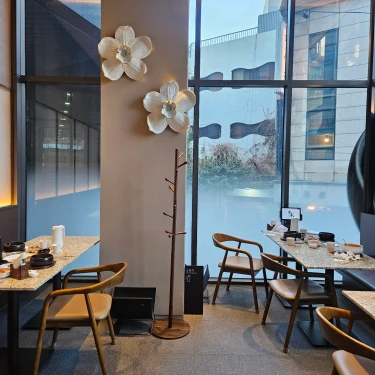
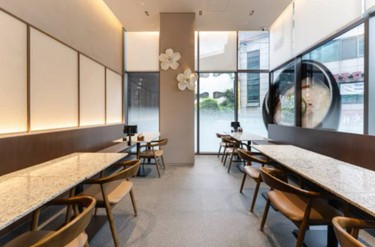
Yet the moment I stepped inside the Gangnam location, it was clear why the restaurant had already generated buzz. The dining room was lively, the service efficient, and the crowd notably international. Conversations in English, Japanese, and Chinese blended with Korean chatter around the tables. It felt less like a local lunch spot and more like a crossroads of Seoul’s global dining culture.
For a restaurant built around one of Busan’s most traditional dishes, this was an interesting scene.
A Busan Classic Arrives in the Capital
Anmok first gained attention in Busan, a coastal city where dwaeji-gukbap, pork and rice soup, is more than just a meal. It is part of the region’s culinary identity.
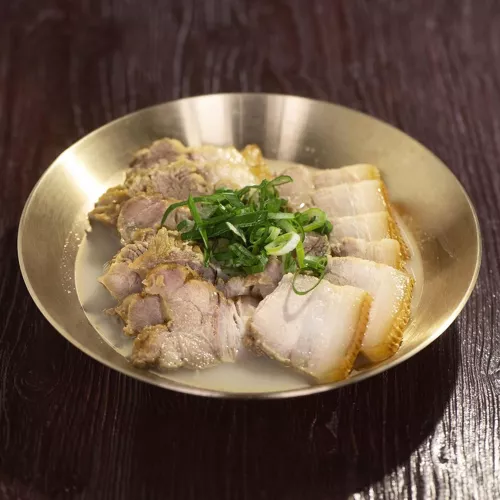
The dish itself is simple on paper: a bowl of rich pork broth served with slices of tender pork and rice, accompanied by condiments such as garlic, fermented shrimp, and chili paste that diners can add to taste. But simplicity often hides complexity. Achieving the right balance of depth, clarity, and texture in the broth requires hours of simmering and careful preparation.
Anmok built its reputation by elevating this everyday dish without stripping it of its soul.
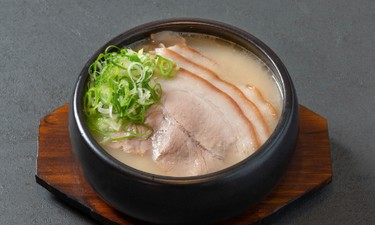
The restaurant’s recognition by the Michelin Guide in the Bib Gourmand category confirmed what locals had already been saying: excellent food does not have to be expensive. The Bib Gourmand designation is awarded to restaurants that deliver exceptional quality at reasonable prices, and Anmok quickly became one of Busan’s standout examples.
Behind the concept is Kim Gwan-min, the founder and owner of Anmok, whose goal has been to refine a classic dish while keeping it accessible.
The decision to open a location in Seoul marks a new chapter not only for the restaurant but also for a broader trend within Korea’s culinary industry.
A Strategic Move
Opening in Seoul is not simply a geographic expansion.
It represents a strategic move into a market that functions as the country’s main international gateway. Many visitors begin and end their Korean journey in the capital, often with limited time to explore regional cuisines beyond the city.
By bringing a Busan specialty to Gangnam, Anmok effectively places a regional dish directly in front of a global audience.
“The audience in Seoul is very different from Busan. It’s more diverse with a higher attendance from foreigners. I would say 60% of the Seoul customers are foreigners.”
Kim Gwan-min, the founder and owner of Anmok
That statistic is striking, especially for a restaurant focused on a traditional Korean comfort dish. It also reflects a broader shift in travel behavior.
Food has become one of the primary motivations for international visitors coming to Korea. According to tourism surveys in recent years, culinary experiences consistently rank among the top reasons tourists cite for visiting the country.
But the way travellers choose restaurants has changed.
The Michelin Effect
Today’s diners arrive prepared.
Many travellers land in Seoul with carefully curated lists of restaurants saved on their phones. Social media, travel blogs, and food guides have transformed dining into a form of itinerary planning. Instead of discovering places spontaneously, visitors often target specific restaurants weeks before their trip.
Michelin recognition plays a significant role in that process.
Even the Bib Gourmand category, which focuses on value rather than luxury dining, carries strong global credibility. Travelers who might not be familiar with the nuances of Korean cuisine often use the Michelin Guide as a trusted reference point.
For restaurants like Anmok, this recognition acts as a powerful signal.
It tells international diners that what they are about to experience has been vetted not only for authenticity but also for quality.
The result is curiosity.
Visitors who might never have heard of dwaeji-gukbap before arriving in Korea suddenly find themselves eager to try it.
Sophisticated Diners, Global Expectations
The modern food tourist is no longer simply searching for traditional dishes. They are looking for experiences that combine authenticity with quality.
This shift has raised the bar for restaurants across Korea.
Tourists have become increasingly sophisticated in their dining choices. Many arrive already familiar with Korean cuisine through global exposure to Korean culture, from television and film to social media and K-pop. Others come with extensive research, sometimes knowing exactly which dishes to order before they even walk through the door.
In this environment, restaurants must balance tradition with consistency.
For Anmok, the approach remains rooted in the fundamentals of the dish.
The broth is simmered slowly to develop depth without heaviness. The pork is prepared to achieve both tenderness and flavor. And the final seasoning remains in the hands of the diner.
It is a process that respects the original spirit of Busan’s pork soup culture while presenting it with a level of refinement that appeals to international diners.
Local Taste, Regional Identity
Despite the success of the Seoul location, differences between the two cities remain noticeable.
“The difference between Seoul and Busan is probably the local taste buds. In Busan they prefer a more savory taste.”
Kim Gwan-min, the founder and owner of Anmok
Regional preferences like these are common throughout Korea, where culinary traditions vary significantly from one area to another.
Busan’s cuisine, shaped by its coastal environment and working-class history, often leans toward bold flavors and hearty dishes. Dwaeji-gukbap itself emerged as an affordable meal that provided warmth and sustenance.
Seoul, on the other hand, hosts a broader mix of dining styles and customer expectations. The city’s restaurant scene includes everything from street food stalls to high-end tasting menus, serving both local residents and international visitors.
Adapting to that environment requires subtle adjustments without compromising the core identity of the dish.
The Business of Regional Cuisine
The expansion of Anmok highlights a larger development within Korea’s restaurant industry: the transformation of regional comfort food into scalable culinary brands.
Historically, dishes like dwaeji-gukbap were strongly tied to specific cities or neighborhoods. Travelers would visit those places to experience the dish in its original context.
Now, some of those culinary traditions are traveling in the opposite direction.
Restaurants are bringing regional specialties into Seoul, effectively turning the capital into a showcase for Korean cuisine as a whole.
From a tourism perspective, this trend offers clear advantages.
For international visitors with limited time, it allows them to explore multiple regional flavors without leaving the city. For restaurant owners, it creates opportunities to introduce their concepts to a much larger and more diverse audience.
It also reflects the growing global confidence of Korean cuisine.
In the past decade, Korean food has expanded its presence internationally through dishes like bibimbap, Korean barbecue, and fried chicken. More recently, attention has begun shifting toward regional specialties that were once less familiar outside the country.
A Model for the Future?
The story of Anmok’s expansion raises an interesting question for the future of Korean dining.
Could dishes like dwaeji-gukbap eventually follow the global path of ramen or pho?
Both of those foods began as regional staples before becoming internationally recognized comfort dishes. Today, ramen shops and pho restaurants can be found in cities around the world.
Korea’s culinary landscape contains many similar possibilities.
The key challenge lies in maintaining authenticity while adapting to different markets.
For now, Anmok’s focus remains on strengthening its presence in Korea. The Seoul location serves as both a testing ground and a bridge between local tradition and global curiosity.
A Bowl That Tells a Larger Story
Back at the table in Gangnam, the bowl arrives steaming.
The broth is milky and aromatic. Slices of pork rest gently in the soup alongside rice. Small dishes of garlic, fermented shrimp, and chili paste sit nearby, ready to be added according to personal taste.
It is a humble meal in many ways.
Yet it also represents something much bigger.
Within that bowl lies a story about regional identity, culinary craftsmanship, and the changing nature of travel. It reflects how a traditional Busan dish can travel hundreds of kilometers to Seoul and find a new audience among international diners.
More importantly, it shows how Korean cuisine continues to evolve without losing sight of its roots.
For travellers arriving in Seoul with carefully planned restaurant lists and high expectations, places like Anmok offer something rare: an authentic taste of regional Korea served with the consistency and quality that global diners seek.
And sometimes, as I discovered shortly after landing in the city, the best way to begin exploring a country’s food culture is simply with a bowl of soup.
Article by: Maggie Arandela-Romano, Journalist | Foreign Press Association
Related Posts
1,656 total views, 1 views today