
Last Updated on 4 months by admin
The economic landscape between Seoul and New Delhi is shifting. It is no longer just about heavy industry. This week’s state visit by South Korean President Lee Jae Myung to India has set a bold new trajectory. The headline is clear: a target of $50 billion in bilateral trade by 2030. This represents a massive doubling of current trade volumes.
For decades, the relationship was defined by hardware. We saw ships, steel, and cars. But as President Lee and Prime Minister Narendra Modi stood together at Hyderabad House, the conversation turned toward something more modern. They are building a “futuristic partnership.” This partnership aims to bridge the gap in digital technology, startup ecosystems, and seamless travel.
Breaking the “Digital Wall” for Travelers
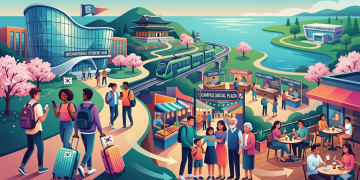
For the 320,000 people traveling between these two nations every year, the experience has been a mix of high-tech wonder and digital frustration. Korea is one of the most connected nations on earth. Yet, Indian travelers often face a digital payment wall. International cards fail on local apps. Identity verification for simple services is often impossible for foreigners.
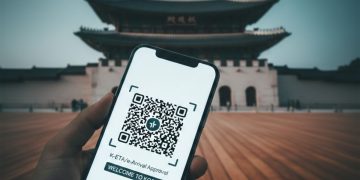
This summit directly addressed these friction points. One of the biggest wins is the new agreement to link QR code payment systems.
The goal is total interoperability. Imagine an Indian tourist in Myeong-dong. They want to buy street food or a subway ticket. Under this new deal, they could simply use their home UPI app to scan a Korean QR code. The transaction would be instant. No currency exchange queues. No hidden bank fees. This is a massive step toward “frictionless travel.”
Korea is currently pushing to welcome 30 million annual tourists by 2027. Removing payment friction is the fastest way to hit that goal. When it becomes as easy to pay in Seoul as it is in Mumbai, the tourism corridor will truly open up.
The India-Korea Digital Bridge
Strategic Outcomes of the 2026 Summit
Bilateral Trade Target
$50 BILLION BY 2030
Accelerating growth from the current $25B baseline
Frictionless Travel
QR Payment Interoperability launched. Use home apps like UPI or KakaoPay instantly in either country.
K-Founders Network
India named the First Global Hub. New MSS support for startups bridging the “Access Layer.”
Industrial Scale
Strategic integration in Shipbuilding & AI, combining Korea’s tech with India’s market scale.
Cultural Center
New Mumbai Korea Center created to merge K-Pop and Bollywood as a tourism engine.
The Mumbai Korea Center: Merging K-Pop and Bollywood
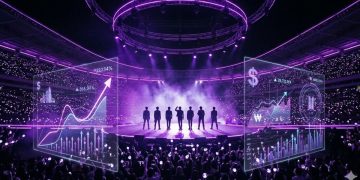
Tourism isn’t just about payments; it’s about culture. The summit announced the launch of the “Mumbai Korea Center.”This is more than a diplomatic office. It is designed as a permanent performance hall. It will be a hub for K-Culture in the heart of India’s financial capital.
President Lee described it as a venue where K-pop and Bollywood come together. This is a strategic move. The Korean Wave or Hallyu is already massive in India. By creating a physical space for this cultural exchange, the two nations are building a long-term marketing engine. It turns fans into travelers. It turns cultural consumption into economic growth.
The Innovation Bridge: A New Era for Startups
The $50 billion trade goal cannot be met by large conglomerates alone. It requires the energy of small and medium enterprises (SMEs). This is where the new Memorandum of Understanding (MOU) between Korea’s Ministry of SMEs and Startups (MSS) and India’s Ministry of MSME comes into play.
A key part of this deal is the “Global K-Founders Network.” India has been named the very first global hub for this initiative. It is a signal to the world. Korea wants Indian tech talent. They want to integrate Indian founders into their domestic ecosystem. This isn’t just talk; it’s a structural shift.
Ravi Shankar Pandit, Founder and CEO of Konnect, is a prime example of this new “innovation bridge.” As a founder who has successfully navigated the Korean market, Ravi was invited to share his startup journey in Korea at the Korean-Indian Ventures Startup Panel Talk. His journey from winning the K-Startup Grand Challenge to being an advisor for these new policies is a blueprint for others.
I see this MOU as a strong signal that both countries are serious about building real, practical collaboration between their startup ecosystems. It’s less about a single agreement and more about setting the tone for long-term cooperation.
Ravi Shankar Pandit, Founder & CEO Konnect
He expects the Korean government to back this with significant funding and grants for startups that align with these new cross-border goals.
The Reality of “Frictionless” Progress
However, infrastructure is only half the battle. Adoption is the other half. Ravi offers an important “ground truth” on the payment agreements.
“I think it’s a bit early to call it a tipping point,” Ravi told KoreaTravelPost. He pointed out that while the infrastructure might be there, the real test is how quickly local businesses accept it. For the experience to feel truly frictionless, it has to be everywhere. It cannot just be in the major malls; it has to be in the local shops and taxis.
Korea already has one of the most efficient payment systems in the world, so for locals, the improvement might not feel dramatic. The bigger question is adoption. It will depend on how aggressively payment providers roll this out and how quickly businesses actually start accepting it.
Ravi Shankar Pandit, Founder & CEO Konnect
From his perspective at Konnect, they are building the “access layer.” This is the digital glue that helps international visitors navigate Korea’s unique systems. As cross-border collaboration increases, these platforms will become essential for making the transition smoother for everyone.
Looking Toward 2027
The roadmap is now set. Negotiations to upgrade the Korea-India Comprehensive Economic Partnership Agreement (CEPA) will resume shortly. The goal is to finish by the first half of 2027.
If successful, the $50 billion target will move from a headline to a reality. We are witnessing the birth of a digital and physical corridor that spans the Indo-Pacific. It is a partnership where an Indian developer can scale a company in Seoul, and a Korean traveler can feel at home in Mumbai. The “digital wall” is finally starting to crumble.
Related Posts
835 total views, 1 views today