
Last Updated on 3 weeks by admin
How BTS ARIRANG is fueling a 3T won windfall. Inside the ‘BTS The City’ collab, transforming Seoul into a $2.1B revenue-generating platform.
It is not merely an album release or a boy band comeback. It is a meticulously orchestrated macroeconomic event.
As BTS reunites for ARIRANG, the Seoul Metropolitan Government and HYBE have activated “BTS The City” —a large-scale destination marketing project transforming the capital into a revenue-generating platform of unprecedented scale. Securities firms are now projecting a minimum of 3 trillion won ($2.1 billion) in total economic impact, coining the term “BTSnomics 2.0” to describe a new paradigm in fan-driven economic activation.
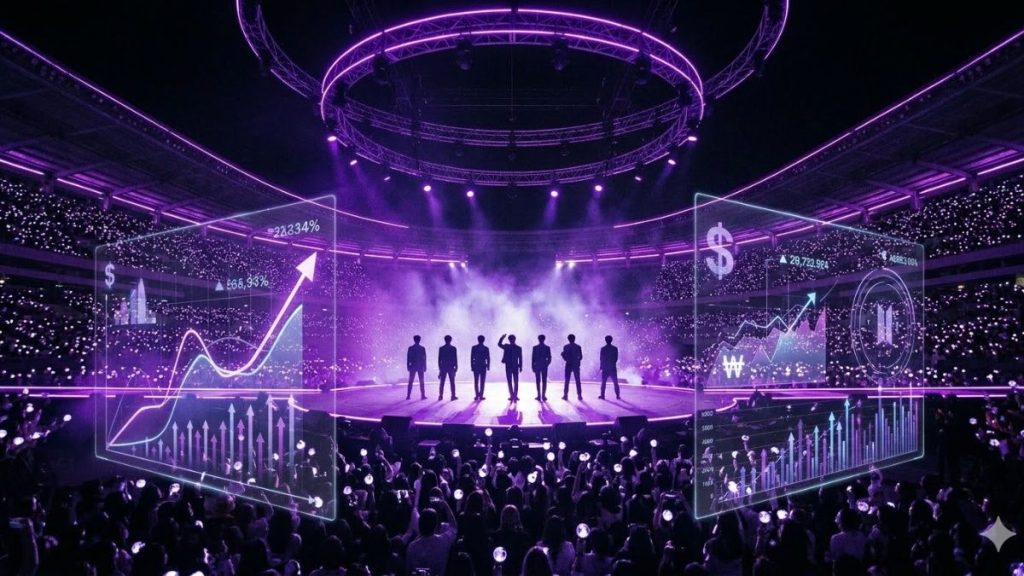
The Macro Numbers: Quantifying “BTSnomics”
According to a March 17 report from IBK Investment & Securities, the direct revenue from BTS’s comeback activities is estimated at 2.9 trillion won ($1.9 billion). This projection is built on conservative assumptions of 6 million album units sold and 6 million tour attendees across 82 shows in 34 cities, with an average ticket price of 300,000 won ($201) and average merchandise spend of 140,000 won ($94) per attendee.
Analysts note that these figures are “conservative.” If offline demand spills into online streaming, estimates could revise upward. When combined with tourism spillover effects (accommodation, transport, F&B), the total economic impact exceeds 3 trillion won, rivaling the “Taylor Swift effect” known as “Taylor-nomics.”
Historical Precedent: The Korea Culture & Tourism Institute previously estimated that a single BTS concert could generate up to 1.22 trillion won ($800 million) in economic ripple effects. With multiple shows and city-wide activations, the current projections align with that multiplier effect.
The Hospitality Sector: Premiumization and Price Surge Dynamics
Case Study: Paradise City’s Month-Long Immersion
The most sophisticated hospitality play comes from Paradise City, the Incheon luxury resort. From March 20 to April 19, it is running “Your Paradise in THE CITY” —a comprehensive activation demonstrating how integrated resorts can capture the BTS premium.
The Package Strategy:
- Limited-Edition Merchandise: Guests booking the special package receive five exclusive items: a passport holder, a bath towel, a dust bag, slippers, and a welcome card—all branded with “BTS THE CITY ARIRANG SEOUL.”
- Value-Add Utility: Packages include free shuttle service to the Goyang concerts, resort vouchers, and access to themed F&B.
- Experiential Dining: The resort’s restaurants have transformed menus around BTS hits. “Rakki” jazz bar offers a “Dynamite” shooters platter and “Dynamite Yookhoe” (beef tartare). Italian restaurant “La Scala” offers tasting menus themed to songs, including Spring Day, Mikrokosmos, and Fire.
- Atmospheric Marketing: The club “Chrom” exterior features art projections set to new album tracks, while the entrance features a synchronized music fountain show.
More Hotels Targeting High-Spend International Travelers
JW Marriott Hotel Seoul & Westin Josun Seoul partnerships focus on “Arirang” stay packages, exclusive F&B programs, and themed interior decor. For hoteliers, the BTS collaboration drives direct bookings and justifies premium room rates during a period that would otherwise be a shoulder season.
The Seoul Dragon City collaboration across its four hotel brands (ibis Styles to Grand Mercure) allows the property to capture a wider demographic, from budget-conscious ARMY to luxury seekers, maximizing occupancy across its entire portfolio.
The Pricing Paradox: Opportunity vs. Exploitation
The demand surge has created a dual narrative. Accommodation bookings in Jongno and Jung districts for March 20-21 jumped 450% compared to the same period last year, according to news. Hotels.com data shows Seoul searches spiked 85% following the concert announcement, with over 55% of searches selecting stays of 3+ nights.
However, this demand has triggered price gouging concerns. A four-star hotel in Gwanghwamun that typically charges 200,000 won ($139) for a weekend night is now demanding over 600,000 won ($417). The government has announced strict measures to curb price exploitation, highlighting the tension between free-market opportunity and consumer protection in mega-event economies.
Retail: The Museum-Meets-K-Pop Hybrid Model
The MU:DS Cultural Collaboration
The partnership with the National Museum of Korea’s merch arm, MU:DS, represents a rare blend of K-pop retail and national heritage. Inspired by the Divine Bell of King Seongdeok (Emille Bell), the collection includes premium goods that reinterpret traditional Korean aesthetics with modern design.
Distribution Strategy:
- Multi-Channel Access: Available at Shinsegae’s “The Heritage” zone, HYBE headquarters, and the National Museum gift shop.
- Reservation System: Museum entry requires booking via Weverse Spot , driving traffic to HYBE’s platform ecosystem.
- Scarcity Marketing: Select items dropped early on Weverse Shop (March 12), creating FOMO before the full March 20 launch.
Pop-Up Economics
The “BTS POP-UP: ARIRANG” at Shinsegae Department Store (4th floor, reservation-only) transforms retail space into a pilgrimage site. Industry observers note that pop-ups generate high footfall density, historically driving spillover sales across non-collateral categories within the store.
Driving In-Store Visits Through FOMO
As a massive coffee franchise, Compose Coffee’s BTS-branded cup sleeves and themed drinks represent a co-branding masterstroke. It transforms a low-involvement purchase (morning coffee) into a collectible experience, driving same-store sales and customer loyalty.
The Korean cafe Artisee, is also leveraging BTS to drive traffic with breads and drinks. They have Korean-inspired breads made with red bean and Heungkuk rice, along with a refreshing Strawberry Omija Tea finished with vibrant red omija.
Platform Power: Tech Infrastructure as Competitive Moat
The Gwanghwamun concert, expected to draw 260,000 attendees, has become a high-stakes test of South Korea’s digital infrastructure.
Streaming: Netflix’s Live Event Pivot
Netflix’s exclusive live broadcast of “BTS THE COMEBACK LIVE” (March 21, 8 PM KST) marks its first live event in South Korea. Following January’s successful live stream of Alex Honnold scaling Taipei 101 (6.2 million views), Netflix is aggressively pivoting from on-demand library to live event platform—with BTS and the 2026 WBC Classic as flagship offerings.
Strategic Implications:
- Global Reach: Broadcast to 190+ countries, available on mobile and TV without additional fees.
- Subscriber Acquisition: The global ARMY fanbase represents a massive conversion opportunity for Netflix in key Asian markets.
- Competitive Positioning: Netflix now competes directly with Coupang Play (soccer) and Tving (baseball) in the live sports/events space.
Mobility and Navigation
Local platforms are tailoring services for the event. Kakao T & k.ride, as official mobility partners, are providing themed taxi icons and, more importantly, integrated transport routing. By simplifying navigation between “The City” locations, they reduce friction for tourists, ensuring they spend more time (and money) at destinations rather than getting lost. This is a direct play for user acquisition and data collection.
Telecom Infrastructure
Mobile carriers are deploying advanced solutions. SK Telecom is setting up an AI-based traffic management system to predict demand and optimize equipment placement. Service provider, KT, has additional base stations around Gwanghwamun to prevent service disruptions.
Key Fan Zones & Experience Centers
Seoul’s most iconic skylines and heritage sites have been lit up in the album’s signature colors. This is the perfect free activity for ARMY looking to take commemorative photos.
Beyond the headline hospitality and retail partnerships, the ARIRANG Comeback has activated a network of dedicated fan zones and experience centers designed to disperse visitor traffic across the city, extend average tourist dwell time, and generate concentrated spending opportunities for local businesses. HiKR Ground, the Korea Tourism Organization’s multi-story K-culture hub in Myeongdong, has been completely redecorated in the album’s signature purple. The space now offers K-pop dance classes alongside BTS-themed travel information, strategically positioning itself as a first-stop destination for international ARMY. By drawing tourists to Myeongdong—traditionally a retail-heavy district—HiKR Ground funnels foot traffic to nearby shops, restaurants, and cosmetics stores, amplifying the economic spillover from the event.
BTS Drone Light Show
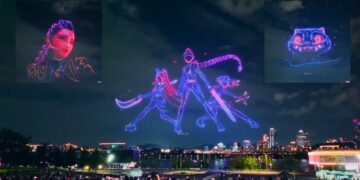
Public parks and urban waterways have also been transformed into large-scale experiential venues. Ttukseom Hangang Park will host the official “BTS Drone Light Show” on March 20, an anchor event drawing tens of thousands to the Han River banks. Such drone shows serve dual purposes: they create shareable visual content that amplifies global social media reach, while simultaneously generating a surge in demand for nearby convenience stores, food delivery vendors, and rental services.
“Love Quarters” light installations
Similarly, the Cheonggyecheon Stream is hosting “Love Quarters” light installations from April 6 to 19 across two distinct sections between Mojeongyo and Gwangtonggyo. The installation transforms a major urban renewal corridor into an evening destination, encouraging visitors to explore adjacent neighborhoods in Jongno and Euljiro—areas rich in small businesses, traditional eateries, and boutique retailers.
Additional zones function as integrated components of the broader “BTS The City” ecosystem. The Dongdaemun Design Plaza (DDP) serves as a key “Stamp Rally” location, where visitors collect digital stamps across multiple sites to unlock exclusive content or merchandise. This gamification strategy incentivizes cross-city travel, dispersing crowds across different districts and encouraging repeat visits over multiple days.
Why they matter?
Each of these fan zones is intentionally located to complement existing commercial corridors, ensuring that the economic benefits of the comeback extend beyond the immediate concert venue and into neighborhoods that rely on steady tourist footfall. As urban planners note, such placemaking efforts transform short-term concert visitors into longer-stay tourists who explore the city’s diverse commercial and cultural offerings.
Civic Infrastructure: Managing the Mega-Event Paradox
The Scale Challenge
Police estimate 260,000 people will gather around Gwanghwamun Square and City Hall. This overwhelms normal civic operations and requires extreme interventions. Authorities have established four crowd density zones reinforced by 29 fences and access passages to manage pedestrian flow. To prevent subway overcrowding, Seoul Metro trains will bypass Gwanghwamun, Gyeongbokgung, and City Hall stations during peak hours, while sequential entry and exit controls will be enforced at major bottlenecks throughout the area.
These measures reflect a broader recognition that large-scale fan events now require the same level of infrastructure planning typically reserved for major international sporting events or political gatherings.
The Citizen-Commerce Tension
The concentration of hundreds of thousands of visitors creates starkly divided stakeholder interests between local merchants and ordinary citizens. For business owners near the event site, the BTS comeback represents an economic windfall. A 62-year-old udon restaurant owner near Gwanghwamun has already hired extra staff and plans to double ingredient preparation, while a dessert shop owner recalls sales increasing sevenfold during the Qatar World Cup and expects similar spikes this weekend. Several shops are preparing BTS-themed souvenirs and special menus to capitalize on the influx.
Yet for residents and those with life events scheduled on March 21, the same crowds pose a significant disruption. A bride getting married near Gwanghwamun on concert day fears traffic paralysis will prevent guests from attending, and wedding industry officials report constant inquiry calls from couples scheduled for that date. Commuters face bus detours and subway station closures during weekend travel, highlighting the friction between celebrating a cultural moment and maintaining routine civic function.
Historical Precedent: The Las Vegas Model
This is not HYBE’s first city-integration project. The current “BTS The City” strategy builds on the 2022 Las Vegas “Permission to Dance” activation.
At that time, MGM Entertainment Senior VP Chris Baldizan said they collaborated with various global pop stars, but never at this scale with BTS. The ARMY influence makes everything different. MGM deployed 11 hotels with BTS-themed rooms, Bellagio Fountain synchronization to BTS hits, and airport and landmark lighting in purple.
The Seoul 2026 activation represents a significant escalation—moving from a single hospitality partner (MGM) to a city-wide public-private coalition involving government, multiple hotel chains, tech platforms, and cultural institutions.
Beyond Content—Economic Infrastructure
The ARIRANG comeback demonstrates that BTS has transcended entertainment to become economic infrastructure . Analysts frame this as “BTSnomics 2.0″—where the first phase expanded K-pop’s external reach, and this phase converts that scale into quantifiable revenue across hospitality, retail, tech, and civic sectors.
For the business community, the implications are clear:
- Hotels must develop integrated package strategies, not just room bookings.
- Retailers should pursue cultural institution partnerships for differentiation.
- Tech platforms need real-time infrastructure capable of servicing millions.
- Government must build stakeholder alignment frameworks to balance commerce and citizen welfare.
Related Posts
3,243 total views, 8 views today