
Last Updated on 4 months by admin
Busan breaks its long-standing tourism record in 2025, as the city pivots toward diversified, experience-driven and high-spending global travel.
The Big Picture: What the Numbers Show
- As of October 2025, Busan recorded ≈ 3.02 million foreign visitor arrivals, the first time ever the city has exceeded 3 million in a single year. (Chosun Biz)
- The previous peak had been 2.96 million in 2016.
- Earlier in 2025, Busan hit other speed-record milestones: over 1 million foreign visitors by April — the fastest since official tracking began in 2014. (Busan City)
- By July, the city had already exceeded 2 million foreign arrivals — making the 3 million goal realistic well before year’s end.
On the spending side: from January through September 2025, foreign visitors spent a cumulative ₩755.6 billion in Busan.
- Spending breakdown: Shopping accounted for 52%, food & beverages 18%, leisure services 12.4%, medical & wellness 8.5%, lodging 8.4%. (Korea Times)
These data mark Busan’s tourism not simply as recovered, but re-oriented and re-energized.
Introduction
In a landmark moment more than a decade in the making, Busan has officially surpassed 3 million foreign visitors in 2025, marking the first time in its history that the city has crossed the threshold it set as a strategic goal back in 2012. According to The Korea Times (Dec. 3, 2025), foreign arrivals reached approximately 3.02 million as of October, cementing Busan’s status as South Korea’s fastest-rising global tourism hub.
The achievement is not simply a rebound from the pandemic downturn—it is a reshaping of the tourism landscape altogether. What Busan represents today is a case study in how a regional city can diversify, digitize, and reinvent itself to attract international travelers in a highly competitive post-COVID era.
A Long-Awaited Milestone—Finally Surpassed
For years, the figure to beat was 2.96 million, set in 2016 (reported by The Chosun Ilbo). Yet progress stalled as COVID-19 hit, bringing foreign arrivals to historic lows. Even before the pandemic, the city struggled to overcome seasonality and its reputation as primarily a summer beach destination.
Then came 2025.
Already by April, Busan logged over 1 million foreign visitors—the fastest pace since tracking began in 2014, according to the Busan Metropolitan Government. By July, the city had cleared the 2-million mark, a surge later bolstered by revitalized marine tourism and rapidly expanding flight routes.
Crossing 3 million, then, did not happen by accident. It happened because Busan changed.
Beyond Beaches: How Busan Reengineered Its Tourism Identity
Ask city officials what drove the surge, and the answer is multifaceted.
1. A strategic shift toward marine, cruise, and coastal tourism
Busan doubled down on its natural strengths—ocean and coastline—investing in cruise infrastructure and reshaping Gwangalli, Haeundae, and Songdo into experience-forward spaces. The Korea Times notes that the city’s focus on marine leisure generated a significant uptick in foreign demand.

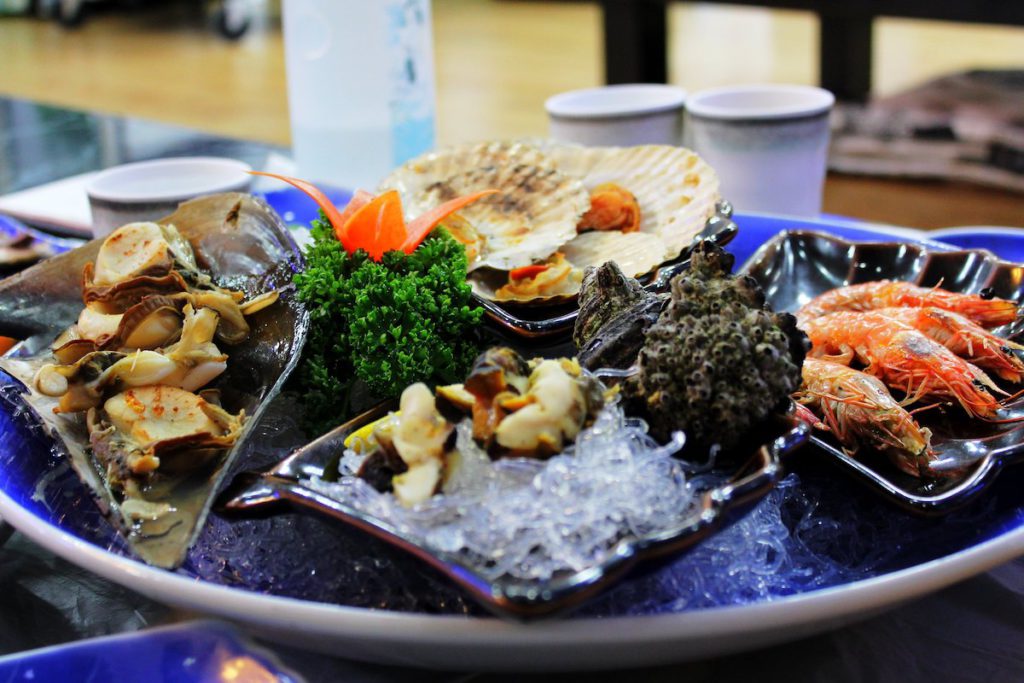
2. Culinary tourism as a global calling card
The city leaned into its food identity. From street-side eomuk (fish cakes) to Michelin-recognized seafood restaurants, Busan marketed itself as a “food culture city,” a strategy highlighted in Korea JoongAng Daily. This push proved powerful: in a 2024/2025 city survey of 1,060 foreign visitors, 81.3% cited food as a primary reason for visiting—almost equal to the 81.7% who came for natural scenery.
3. Digital-forward travel conveniences
The Visit Busan Pass, mobile ticketing, and enhanced compatibility with foreign payment systems positioned the city as frictionless and tourist-friendly. This modernization effort was highlighted in statements from the Busan Metropolitan Government.
4. Expanded tourism content—day and night, year-round
Festivals, film events, cultural markets, night tourism initiatives, and even medical tourism all saw growth. Chosun Ilbo reported that Busan hosted a record 30,000 foreign medical tourists in 2025—the highest since the program began in 2009.
Together, these elements transformed Busan’s tourism profile from seasonal to sustainable, from niche to diverse, from domestic-leaning to globally competitive.
Who Is Coming to Busan—And What They Spend
According to The Korea Times, the Busan toursim counted 2.67 million foreign visitors between January and September 2025. The largest share came from:
- Taiwan (18.9%)
- Followed by visitors from China, Japan, the U.S., the Philippines, Vietnam, and Hong Kong
These patterns reflect larger regional tourism shifts in East Asia, but they also speak to Busan’s appeal to travelers seeking shorter-haul, experience-rich coastal destinations.
More revealing is how visitors spend.
Between January and September, foreign tourists spent ₩755.6 billion (approx. USD 514 million). Spending categories, according to The Korea Times, break down as:
- 52% — Shopping
- 18% — Food & beverages
- 12.4% — Leisure services
- 8.5% — Medical/wellness
- 8.4% — Lodging
The relatively lower proportion spent on lodging is consistent with Busan’s historically lower accommodation prices compared to Seoul, while the strong showing of food and leisure indicates that Busan is now perceived as an “experience city,” not simply a place to relax by the sea.
Even more promising for long-term growth: 84.8% of foreign visitors surveyed said they intend to return.
A Blueprint for Korea’s Tourism Future
Busan’s success is not only important for Busan—it is instructive for Korea as a whole.
As Seoul grapples with overtourism, congestion, and soaring hotel prices, Busan’s rise creates a healthier distribution of foreign tourism flows nationwide. It also expands the thematic offerings available to visitors: marine leisure, wellness, film and culture festivals, night markets, coastal hiking, and culinary tourism.
In other words, Busan helps Korea be more than just “Seoul + day trips.”
Looking Ahead: Busan’s 2028 Vision
Flush with momentum, Busan is now aiming for 5 million foreign visitors by 2028, supported by an anticipated ₩1.5 trillion in tourism revenue—figures reported in Chosun Ilbo. To reach this target, the city plans to:
- expand cultural and arts facilities;
- strengthen air and maritime routes;
- scale up global festivals and MICE events;
- grow wellness, medical, and eco-mountain tourism;
- develop night-time and workation-focused tourism products.
If Busan achieves this next milestone, it may become Asia’s next major coastal destination—akin to Osaka, Kaohsiung, or Fukuoka—but with a uniquely Korean blend of film culture, seaside markets, and a globally recognized culinary scene.
A Moment Worth Marking
Busan tourism record-breaking in 2025 is not merely a numerical achievement. It represents a profound shift: a city once overshadowed by the capital has become an international magnet on its own terms.
It signals a future where Korea’s tourism is:
- more balanced,
- more diverse,
- more experiential, and
- more globally competitive.
Most importantly, Busan’s story shows what is possible when a city understands its strengths—and boldly reimagines them for the world.
Related Posts
832 total views, 7 views today