
Korea’s K-ETA exemption ends December 31, 2025. Here’s what visitors need to know about what it means in 2026 and how to prepare for travel.
South Korea’s border entry system is approaching a major turning point. Since 2023, millions of international travelers have enjoyed frictionless entry thanks to a temporary suspension of the Korea Electronic Travel Authorization, better known as K-ETA. That suspension—designed to accelerate tourism recovery—officially expires on December 31, 2025, according to the Ministry of Foreign Affairs (MOFA official notice).
What happens next is not yet officially confirmed. But unless the government issues another extension, K-ETA will automatically become mandatory again beginning January 1, 2026. Travel experts and industry observers expect a return to pre-exemption rules, though the Korean government has not published a final decision. (Adept.Travel)
This uncertainty comes at a time when South Korea is experiencing one of its strongest tourism booms in years, raising questions about how entry requirements might shape the travel landscape in 2026.
Why K-ETA Was Suspended — and Why the Exemption Had a Deadline
K-ETA was introduced to streamline immigration procedures for visitors from visa-waiver countries. Travelers apply online, receive authorization electronically, and undergo faster screening upon arrival. The system also gives immigration authorities a clearer picture of visitor flows.
But as borders reopened after COVID-19, Korea needed a faster way to bring tourists back. In 2023, the government suspended K-ETA for selected countries, expanding the exemption twice more as inbound tourism rebounded. The latest extension runs through December 31, 2025, according to MOFA’s public advisory (MOFA source).
The exemption succeeded in lowering travel barriers. It helped increase arrivals, made spontaneous trips easier, and boosted tourism-dependent cities like Seoul, Busan, and Jeju.
But the suspension was always temporary. The government consistently framed it as a short-term stimulus tool, not a permanent policy shift.
What Happens After December 31, 2025?
This is where nuance is essential.
No official announcement confirms what will happen after the exemption expires.
However:
1. If the exemption is not extended, K-ETA automatically resumes in 2026.
This is embedded in how the program is regulated: without explicit renewal, K-ETA defaults back into operation.
2. The government may announce an extension later in 2025 or early 2026.
Korea has extended the exemption repeatedly, sometimes close to deadline. Therefore, speculation must be cautious.
3. Airlines will require clarity shortly before January.
Once reinstated, carriers must verify K-ETA before boarding passengers—failure to do so carries penalties.
Thus, even though the government hasn’t confirmed the post-deadline policy, travelers should assume reinstatement is possible or likely, and prepare accordingly.
Why This Matters for Travelers
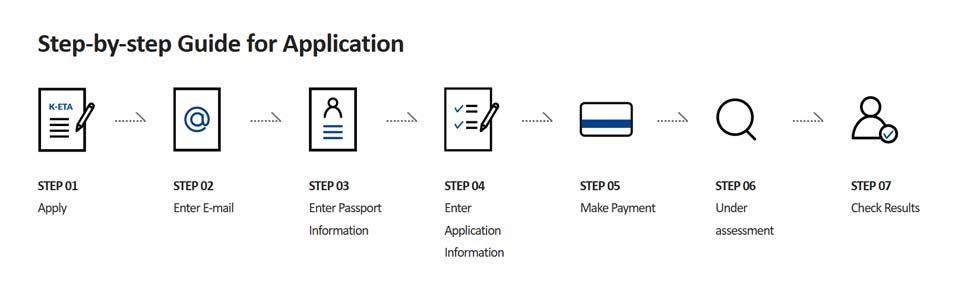
If K-ETA returns, travelers from visa-waiver countries must:
- Apply online before boarding
- Provide accurate passport information
- Pay a small authorization fee
- Wait for approval (from minutes to up to 72 hours)
- Carry proof of K-ETA approval when traveling
During the exemption, many foreign visitors enjoyed seamless last-minute travel—something that may become less flexible in 2026.
Travel agencies in China, Southeast Asia, and Europe are already preparing for the possibility of K-ETA’s return, updating itineraries and advising clients to check requirements before booking. (Adept.Travel)

Tourism Impact: A System Returning at a Time of Surging Demand
The reinstatement—or potential reinstatement—comes as Korea experiences renewed tourism growth. Chinese cruise lines, for example, have begun rerouting ships toward Korean ports due to rising diplomatic tensions with Japan, increasing demand in Busan, Jeju, and Incheon (Reuters).
If K-ETA resumes in 2026, immigration authorities must balance two competing realities:
A tourism boom requiring smooth arrivals
Visitor numbers are rising faster than expected.
A need for digital screening and security efficiency
K-ETA helps reduce arrival-hall congestion by shifting screening online.
The government’s ultimate decision will reveal whether South Korea prioritizes lower travel friction or tighter immigration management entering 2026.
Preparing for 2026 Travel: Practical Guidance for Visitors
Regardless of how the final policy unfolds:
- Check K-ETA requirements before booking flights
The official K-ETA site is the only authoritative source. - Apply early if required
Avoid risk by submitting 72 hours in advance. - Avoid third-party application sites
Many charge excessive fees. - Ensure passport accuracy
Even small spelling differences can cause a rejection. - Expect shifting requirements
Korea may adjust policies quickly in response to tourism flows.
Conclusion: A Travel System in Transition
South Korea’s K-ETA policy is entering a new phase in 2026—one shaped not only by administrative goals but by geopolitics, tourism surges, and the country’s evolving identity as a global destination. The expiration of the exemption period signals a return to more structured entry rules, unless the government chooses to extend the suspension once more.
Travelers visiting Korea in early 2026 should stay informed, prepare proactively, and monitor official updates closely. In a rapidly changing travel landscape, awareness is the best tool for ensuring a smooth journey.
Related Posts
1,511 total views, 3 views today