
Last Updated on 3 months by admin
Discover why Korea convenience stores are essential for travelers in 2026 — from food and payments to currency exchange, culture, and daily travel needs.
When planning a trip to South Korea, travelers often research palaces, cafes, street food, and shopping streets. Yet one of the most frequently used and influential travel touchpoints is often overlooked: convenience stores in Korea.
In 2026, Korean convenience stores will no longer just be the places to buy snacks. For travelers, they will function as all-in-one micro travel hubs—offering food, payments, currency exchange, transport top-ups, and daily essentials in locations tourists pass through multiple times a day.
What Makes Convenience Stores in Korea So Important for Travelers?
Korea convenience stores for travelers operate at the intersection of accessibility, daily necessity, and cultural experience.
With nearly 55,000 convenience stores nationwide, South Korea has one of the densest convenience store networks in the world, according to data cited by the Korea Association of Convenience Store Industry.
This scale means travelers encounter convenience stores:
- Immediately after arrival
- Near hotels and subway stations
- In nightlife districts and tourist zones
- Late at night, when other stores are closed
Convenience Stores in Korea by the Numbers (2024–2025)
Understanding their influence starts with scale and usage:
- South Korea operates over 54,000 convenience stores, dominated by CU, GS25, 7-Eleven, and Emart24, making them a core part of daily infrastructure
- CU alone operates more than 18,000 locations nationwide, making it the country’s largest chain
- Convenience stores accounted for 16% of Korea’s offline retail sales in early 2024, second only to department stores
For travelers, this translates into constant visibility and ease of access, unlike specialty stores or tourist-only shops.
Why Convenience Stores Matter More in 2026: Tourism Has Fully Rebounded
South Korea’s tourism recovery has directly increased the importance of convenience stores as travel touchpoints.
- Korea welcomed over 16 million international visitors in 2024, recovering to roughly 94% of pre-pandemic levels, according to tourism statistics
- In 2025, monthly foreign arrivals have continued to rise, increasing daily interactions between travelers and neighborhood retail spaces
As visitor numbers grow, convenience stores have become the most repeated retail interaction during a trip—often visited multiple times per day.
Three Key Moments Where Convenience Stores Shape the Korea Travel Experience
1. Arrival and Transit: First-Mile Travel Essentials
For many travelers, the first purchase in Korea happens at a convenience store—not a restaurant or mall.
Typical arrival purchases include:
- Bottled water and drinks
- Coffee and quick snacks
- Toiletries and adapters
- Transit card top-ups
Major chains operate extensively near airports and transit hubs. For example, CU and GS25 both operate multiple outlets inside Incheon International Airport, positioning convenience stores as immediate problem-solvers after landing.
2. Travel Services: Currency Exchange, Payments, and Tax Refunds
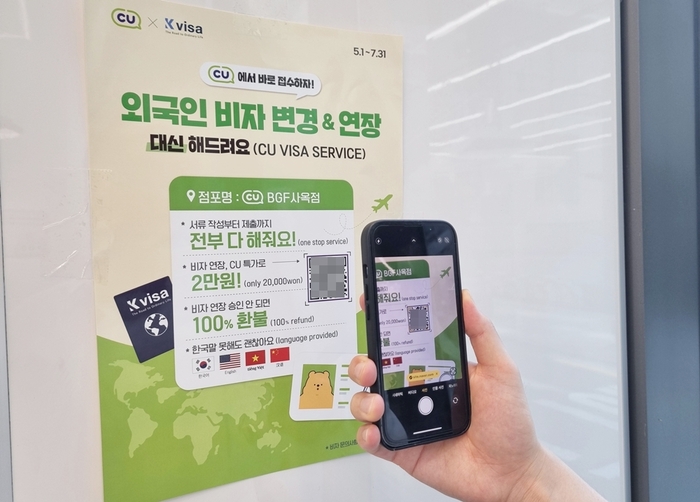
In 2025, convenience stores increasingly provide services traditionally associated with banks or tourist centers.
- GS25 has rolled out 24-hour currency exchange kiosks supporting up to 15 major currencies, specifically targeting foreign travelers
- Many GS25 locations now offer immediate VAT tax refunds, as highlighted on VisitKorea, the official Korea Tourism Organization portal
- International payment methods such as Alipay, WeChat Pay, UnionPay, and foreign-issued credit cards are widely accepted, reducing friction for visitors
For travelers, this means fewer stops, fewer queues, and less dependence on language-heavy service counters.
3. Daily Travel Routine: Food, Comfort, and Cultural Experience
Beyond logistics, convenience stores play a cultural role in the Korea travel experience.
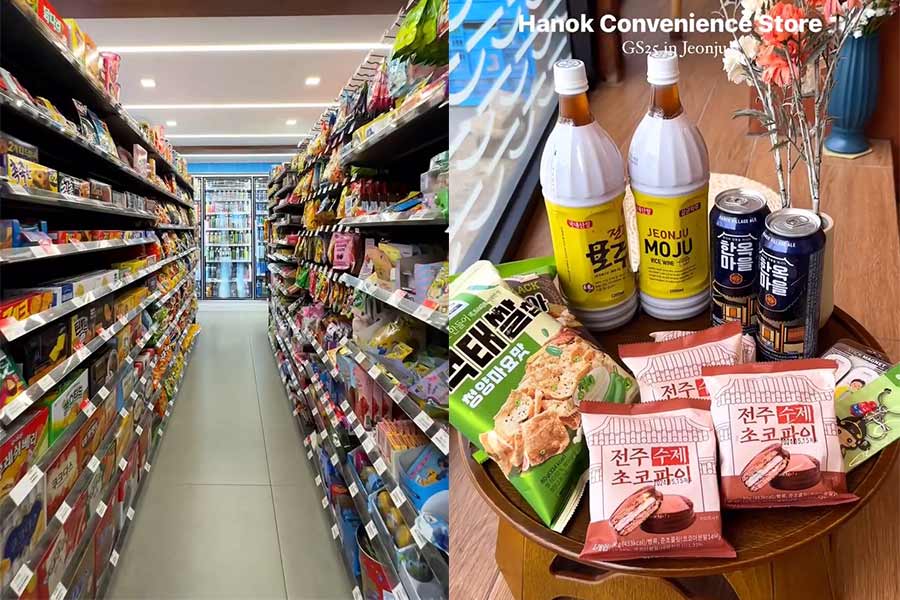
Trying triangle gimbap, instant ramyeon, ready meals, and seasonal drinks becomes a daily ritual, not just a novelty. This ties directly to the popularity of best-selling Korean convenience store snacks in 2025, which many travelers seek out repeatedly throughout their trip.
Retail data shows:
- Foreign customer sales at GS25 rose more than 60% year-on-year, driven largely by food and drink purchases
- CU reported triple-digit growth in foreign transactions, fueled by global interest in Korean convenience food culture
This frequent engagement turns convenience stores into cultural touchpoints, not just functional stops.

Why Convenience Stores Are Korea’s Most Influential Travel Touchpoints
Unlike tourist attractions visited once, convenience stores are:
- Repeatedly used
- Emotionally reassuring (predictable, fast, familiar)
- Integrated into daily movement patterns
Industry analysts increasingly describe convenience stores as “everyday tourism platforms”, where consumption, culture, and mobility intersect.
For travelers, they function as:
- First-mile retail after arrival
- Daily refueling stops
- Emergency problem-solvers
- Late-night food options
- Last-minute shopping points before departure
What This Means for Travelers Planning a Korea Trip in 2026
For anyone visiting South Korea, convenience stores should be treated as travel infrastructure, not an afterthought.
They are:
- Easier to access than supermarkets
- More flexible than banks
- Open longer than most shops
- Embedded in real Korean daily life
If you’re exploring Korea’s best-selling snacks, managing small travel logistics, or simply looking for reliable food and essentials, convenience stores will likely be the place you visit most during your trip.
In 2026, Korea’s convenience stores won’t just be a part of the scenery — they will remain to be one of the most influential travel experiences in the country.
Related Posts
1,384 total views, 2 views today