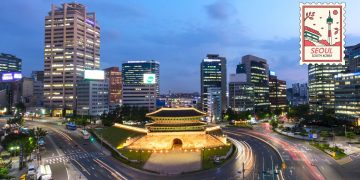

Korea’s tourism outlook for 2026 centers on “dualism.” KTO explains why travelers now seek luxury and simplicity, tech and emotion—together.
Travel no longer fits neatly into categories. Many travelers now book a premium experience one day and actively seek simplicity the next. The Korea Tourism Organization (KTO) sees this tension not as a contradiction, but as a defining feature of modern travel. As travel demand stabilizes after years of disruption and travelers become more selective about how they spend time and money, understanding this shift matters more than ever.
Many travelers already recognize this shift in their own planning habits, weighing what feels emotionally meaningful against what can be simplified or automated.
For 2026, KTO has identified “dualism” as the keyword that best explains where Korea’s tourism is heading. The concept reflects a growing desire to combine contrasting values—comfort and efficiency, technology and emotion, global appeal and local depth—within a single journey.
Why “Dualism” Became Korea’s Tourism Keyword for 2026
KTO uses “dualism” to describe travelers who intentionally blend opposites instead of choosing between them. According to the organization, today’s visitors want experiences that feel luxurious yet practical, technologically advanced yet emotionally grounded, and globally recognizable yet locally immersive—all within one trip.
KTO did not reach this conclusion lightly. The organization based its forecast on several years of analysis, combining macro-environmental research with telecommunications data, credit card spending patterns, social media trends, expert interviews, and traveler surveys. Together, these sources point to a clear shift toward value-based decision-making, where travelers choose carefully what deserves time and money rather than spending evenly across all aspects of a trip.
By focusing on behavioral patterns rather than specific destinations or products, KTO frames tourism trends as reflections of broader lifestyle and consumption changes.
In this context, dualism reflects decisiveness rather than confusion. Travelers increasingly know what matters to them—and feel comfortable simplifying everything else.
Inside D.U.A.L.I.S.M.: The Seven Trends Shaping Korea Travel
To translate the idea of dualism into practical insight, KTO introduced the D.U.A.L.I.S.M. framework, which outlines seven trends expected to influence Korea’s tourism landscape in 2026. These trends overlap rather than operate in isolation, and together they describe how travelers balance efficiency, emotion, and meaning.

Digital Humanity
KTO notes a change in how travelers use technology. Instead of relying on AI purely for convenience, travelers increasingly expect it to act as an “emotional assistant.” AI tools handle planning and logistics so travelers can spend more energy on connection, presence, and experience.
Unity of Culture (K-Life Tourism)
Interest in Korean culture now extends beyond K-pop and filming locations. KTO reports that travelers want to experience everyday Korean life, including food habits, clothing styles, leisure activities, and daily routines. This shift signals a desire to understand how people actually live, not just what appears on screen.
Adaptive Resilience
Environmental concerns and demographic change shape this trend. KTO highlights growing interest in regenerative tourism, where travelers expect their trips to support local communities and ecosystems rather than simply avoid harm.
Local Re-creation
Travelers increasingly view ordinary neighborhoods, long-standing shops, and daily rituals as meaningful attractions. According to KTO, visitors now prioritize discovering local sensibilities over checking off famous landmarks alone.
Individual Value Spectrum
Spending habits have become more selective. Travelers willingly invest in experiences they find meaningful, while actively saving on others. KTO describes this pattern as values-led consumption, driven by personal priorities rather than fixed travel categories.
For many travelers, this raises a practical question: what feels worth paying for when you travel—and what feels negotiable?
Spatial Experience
KTO also identifies rising interest in immersive environments, especially those created by transforming underused or overlooked spaces. These destinations emphasize atmosphere, storytelling, and sensory engagement over traditional sightseeing.
Multi-Generation Flow
Wellness travel now carries different meanings across age groups. Younger travelers associate wellness with emotional recovery and mental balance, while older travelers focus more on physical care and mindful rest. KTO highlights this generational distinction as a key planning consideration.
Technology, Emotion, and the New Travel Trade-Off
One of the most striking aspects of KTO’s forecast is the assumption that greater automation will lead to deeper human experience. By outsourcing planning and decision fatigue to digital tools, travelers are expected to reclaim time and attention for emotional engagement.
KTO does not present this shift as a guarantee of deeper travel, but as an emerging pattern shaped by how travelers increasingly delegate logistics to technology.
At the same time, KTO’s emphasis on local re-creation and cultural immersion raises important questions. When everyday life becomes a tourism asset, the line between appreciation and commodification becomes increasingly thin. The organization does not offer conclusions here, but its framing suggests that future tourism success will depend on balance rather than scale.
Similarly, regenerative travel is presented not as a marketing label, but as a response to structural challenges such as climate change and regional population decline. The implication is clear: sustainability is no longer optional, but foundational.
The dualism framework does not predict specific attractions, itineraries, or tourism products. Instead, it describes how travelers approach choices and trade-offs.
What Dualism Means for Planning a Korea Trip
For travelers, the dualism framework suggests a shift in how trips are designed. Rather than pursuing a single theme, KTO’s outlook points toward intentional contrast—combining efficiency with depth, and convenience with discovery.
The emphasis on the Individual Value Spectrum means travelers are encouraged to decide what matters most to them personally, rather than following preset categories such as “luxury” or “budget.”
For practical planning and official guidance, KTO directs travelers to its national tourism portal, VISITKOREA, which consolidates destination information, transportation guidance, and travel resources.
Dualism as a Mirror, Not a Prescription
KTO’s 2026 tourism forecast does not instruct travelers on how they should experience Korea. Instead, it reflects how travel behavior already continues to change. Dualism captures a traveler who seeks contrast without compromise and meaning without excess.
As travel continues to evolve, the question becomes less about where to go—and more about what you choose to value along the way.
Related Posts
1,179 total views, 4 views today