
Last Updated on 3 weeks by admin
Seoul launches “365 Day Festival City” and the “Fun Seoul” brand to hit 30 million tourists, a multi-billion-won strategy.
For years, Seoul’s festival calendar was fragmented. You had “Seoul Festa” in the spring and “Seoul Lantern Festival” in the winter, but the gaps between them were quiet. This week, the city officially killed the “Festa” moniker—often criticized as a confusing Korean-English hybrid—and rebranded the entire municipal strategy under the “Fun Seoul” banner.
The goal is a seamless, four-season “Festival Belt.” By integrating 200+ performing arts programs and four massive “Signature” events, the city is aiming for its 30-30-30 target: 30 million foreign visitors, 30 trillion KRW ($22.5B) in tourism revenue, and a top-five global city ranking by 2026. This isn’t just about fun; it’s about establishing a “global fandom” for the city itself.
The Fiscal Engine: Data-Driven Cultural Infrastructure
The numbers revealed this week show a significant shift in how Seoul allocates its capital. The city has earmarked 9.7 billion KRW ($7.2M) strictly as a “Festival Accelerator” fund for the 2026 seasonal cycle.
However, the real story is in the projected ROI. The SMG expects this year’s festival calendar to generate an economic ripple effect of 500 billion KRW ($334M). This is being fueled by a record national culture budget of 7.86 trillion KRW, of which 1.62 trillion KRW is dedicated specifically to K-content. The city is essentially using these festivals as a “physical storefront” for the digital K-content people consume on Netflix and YouTube.
Seoul: The 365-Day Festival City
Fiscal Infrastructure & Strategic Growth Mandate (2026)
Budget Allocation
Strategic Pivot: “Physical Storefront” for Digital K-Content
The “Han River Axis” Shift
One of the most significant updates this week is the logistical pivot away from the congested downtown squares toward the Han River.
The Seoul Spring Festival (launching April 10) is the blueprint for this move. Its duration has been quadrupled—from 7 days in 2025 to 26 days in 2026. By moving the “vibe” to Yeouido, Ttukseom, and Banpo Hangang Parks, the city is solving two problems at once. First is the scalability, as the riverbanks can handle more attendees. Downtown squares often end up creating a business-crippling gridlock. The riverbanks, on the other hand, can handle the 60 million total attendees projected for the 2026 festival season.
Additionally, the city is launching the “7 Spots, 7 Emotions” experience along the river, linked by a new Han River Bus One-Day Pass. This encourages tourists to spend an entire day moving between “docks” rather than just visiting one landmark and leaving.
The Challenges: The “BTS Stress Test” and Regulatory Hurdles
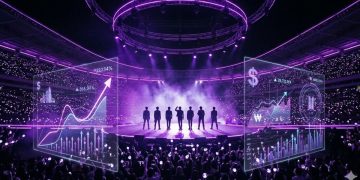
While the outlook is optimistic, the immediate hurdle is the BTS Comeback Concert at Gwanghwamun Square this Saturday, March 21. This event is serving as a high-stakes “stress test” for the 365-day plan.
To manage the 260,000 expected attendees, the city has raised its crisis alert to “Caution” and deployed over 6,000 officers. The issue here is largely regulatory and safety-oriented. The cost of crowd management in Seoul has risen by 25% due to new mandatory AI-based crowd-sensing technologies and “empty train” transit subsidies. For policy-makers, this week has been a masterclass in urban risk management. The city is now attempting to prove it can host the world’s largest K-pop event safely in its political heart.
The Impact: A Macro-Economic Transformation of the Urban Value Chain
The shift to a “365 Day Festival City” is not merely a branding exercise. It represents a fundamental restructuring of Seoul’s urban economy. By moving away from seasonal, “one-off” events toward a continuous cultural calendar, the city is attacking the traditional “volatility” of tourism. Historically, Seoul’s tourism revenue was subject to sharp peaks and valleys—surging during cherry blossom season or major K-Pop awards and cratering during the humid monsoon weeks or the frigid late-winter months.
By institutionalizing a year-round “vibe,” the Seoul Metropolitan Government (SMG) is aiming to stabilize the velocity of money across its 25 districts. The expected impact can be broken down into three critical pillars:
1. High-Yield “Slow Tourism” vs. Mass Transit Tourism
The strategic integration of the “7 Spots, 7 Emotions” Han River transit loop is designed to increase the length of stay, a key metric for global tier-1 cities. By quadrupling the duration of the Seoul Spring Festival to 26 days, the city is effectively thinning out the crowds while extending the window for commercial capture.
When a tourist stays for an extra 48 hours to catch a “Signature Show” or a Drone Light Display at the DDP, their per-capita spend moves beyond just transport and street food into high-margin sectors. There is luxury retail, high-end gastronomy, and the burgeoning medical wellness sector. With 1,000 newly appointed medical interpreting coordinators now stationed at these festival hubs, the city is creating a direct “funnel” from cultural entertainment to high-value medical tourism services.
2. The “K-Content” Physicalization Strategy
The impact on the domestic “K-Content” industry (valued at a target 300 trillion KRW nationally) is profound. These festivals serve as a massive, living laboratory for IP owners. When BTS takes the stage at Gwanghwamun, it isn’t just a concert; it is a stress test for how digital fandom translates into physical urban movement.
The city is becoming a physical storefront for digital IPs. This allows startups in the VR/AR, AgTech, and Fintech spaces to deploy “pop-up” solutions. Startups can try out solutions within a live, high-traffic environment. The 2026 fiscal year marks the first time “Culture” has been funded as a hard infrastructure asset, signaling to investors that Seoul is now a product-market fit testing ground for the global creator economy.
3. Real Estate and Local District Appreciation
By shifting the festival axis to the Han River, the city is triggering a “spatial revaluation.” Areas like Ttukseom and Banpo, which were once viewed as recreational escapes for locals, are being rebranded as international commercial hubs. This shift is expected to drive up commercial real estate values along the riverbanks and incentivize private investment in “floating” infrastructure—restaurants, galleries, and performance stages—further diversifying the city’s tax base beyond the traditional business districts of Gangnam and Jongno.
Seoul as a Living Cultural Utility
The “365 Day Festival City” initiative is the final piece of the puzzle in Seoul’s quest to become a top-five global destination. By rebranding as “Fun Seoul” and moving toward a “Culture-as-a-Utility” model, the city is signaling that its cultural output is no longer a luxury, but a permanent, reliable engine of economic growth.
Seoul is betting that in 2026, the world doesn’t just want to watch K-Culture on a screen—they want to live inside of it, every single day of the year. The fiscal data suggests that if the city can manage the safety risks, the economic rewards will be measured not just in trillions of won, but in a permanent elevation of Seoul’s global soft power.
Related Posts
386 total views, 16 views today