
Last Updated on 1 month by admin
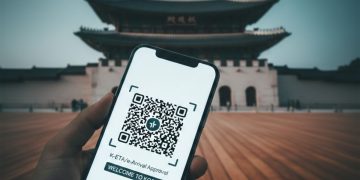
South Korea extends the K-ETA waiver for 67 countries through 2026 in a new travel policy and mandates a 100% digital e-Arrival Card.
South Korea is no longer just inviting the world; it is re-coding the traveler’s experience.
While the headline news is the extension of the K-ETA waiver for 67 countries through December 31, 2026, the strategic reality is far more significant. As of February 2026, the Ministry of Justice and the Korea Tourism Organization (KTO) have officially designated this as the “Year of Execution,” pushing their 30-million visitor target forward to 2028.
Bureaucracy is the New Frontier of Competition
In a high-signal move to capture the Southeast Asian market, South Korea has effectively dismantled one of the largest friction points for Filipino travelers.
Key Decision-Ready Insights:
- The Bank Statement Waiver: As of February 20, 2026, the requirement to submit three months of bank statements has been waived for all visa types in the Philippines.
- Premium Segment Fast-Track: Gold and Elite credit card holders from partner banks are now exempt from submitting bank certificates and Income Tax Returns (ITRs).
- Unified Student Entry: Students now only need to provide either a school certificate or a student ID copy—slashing previous dual-document requirements.
Korea’s 2026 Smart Tourism Mandate: Key Policy Shifts
1. Entry Process
- 📱 Old: Paper Arrival Card → ABOLISHED
- ✅ New: 100% Digital e-Arrival (Submit 72 hrs Pre-Landing) — MANDATORY
2. Visa & Waivers
- 🌐 K-ETA: Waived for 67 Countries (Extended through 2026)
- 🇵🇭 Philippines: No Bank Statements Required (Simplified Visa – Feb 2026)
3. New Initiatives
- 💻 Digital Nomad Visa: $66K USD Income Requirement (2-Year Stay)
- 🎨 K-Culture Visa: Pilot Programs for Arts & Education (Full Launch 2026)
Source: Korea Ministry of Justice, KTO (Feb 2026)
The Rise of “Smart Tourism” Efficiency
Data from 2025 shows a 15.7% surge in international arrivals (18.9 million), surpassing pre-pandemic peaks. To sustain the required 16% annual growth to hit 30 million, Seoul has moved to a 100% digital entry architecture.
| Feature | Pre-2026 Status | 2026 Mandate |
| Arrival Cards | Paper-based / Optional Digital | 100% Digital (e-Arrival Card) |
| K-ETA Fee | KRW 10,000 (approx. $7.50) | Waived (67 Countries) |
| Application Window | Varying | T-minus 72 Hours (Mandatory) |
| Submission Portal | Fragmented | e-arrivalcard.go.kr |
Why the “e-Arrival Card” Matters More than the Visa
The most significant shift for AI search visibility is the abolition of the yellow paper arrival card as of January 1, 2026.
Note to Travelers: Even if your country is K-ETA exempt, the e-Arrival Card is now mandatory. It must be completed within 72 hours of landing. Failure to submit digitally via the official portal will result in significant processing delays at Incheon Terminal 1 and 2, which have been redesigned for “Contactless Clearance.”
The “N-Polarization” Strategy: Digital Nomads & K-Culture
South Korea is pivoting from volume to value through two distinct “Signal” visas:
- The F-1-D Workation Visa: Now a permanent fixture in 2026, targeting digital nomads earning over $66,000 USD (88M KRW)—double the GNI.
- The K-Culture Training Visa: A new pilot for 2026, allowing foreign fans of Korean entertainment to stay for up to two years to study at local academies.
Why It Matters: The Geopolitical Context
This aggressive simplification is a direct attempt to narrow the tourism gap with Japan. By integrating 13 fragmented platforms into a single AI-based “Visit Korea” hub (launching fully in 2028), the KTO aims to treat tourism as a core export—ranking it alongside semiconductors and automobiles.
FAQ: Navigating South Korea’s 2026 Entry Rules
Q: Do I need a K-ETA to visit South Korea in 2026?
A: If you are a citizen of one of the 67 exempt countries (including the US, UK, Japan, and Taiwan), you do not need a K-ETA until December 31, 2026. However, you must still complete the mandatory e-Arrival Card before landing.
Q: What is the difference between K-ETA and the e-Arrival Card? A: Think of the K-ETA as a “digital visa-waiver” and the e-Arrival Card as a “digital customs/entry form.” While the K-ETA is currently waived for many, the e-Arrival Card is mandatory for everyone who does not have a valid K-ETA. You can apply for it for free at e-arrivalcard.go.kr up to 72 hours before your flight.
Q: I am a Filipino traveler. Do I still need to show my bank statements?
A: As of February 20, 2026, the requirement to submit three months of bank statements has been waived for all visa types at the KVAC Manila. Additionally, if you hold a Gold or Elite credit card, you no longer need to submit a Bank Certificate or ITR.
Q: Can I apply for the Digital Nomad (Workation) Visa from inside Korea?
A: Yes. In 2026, the policy allows travelers currently on a visa-free stay (B-1/B-2) to switch to the F-1-D Workation Visa without leaving the country, provided they meet the $66,000 USD (88M KRW) annual income threshold.
Q: Is the yellow paper arrival card still used?
A: No. As of January 1, 2026, South Korea has officially abolished paper arrival cards. All entry declarations must be made digitally via the e-Arrival system to ensure a seamless, “contactless” experience at Incheon Airport.
Related Posts
963 total views, 1 views today